
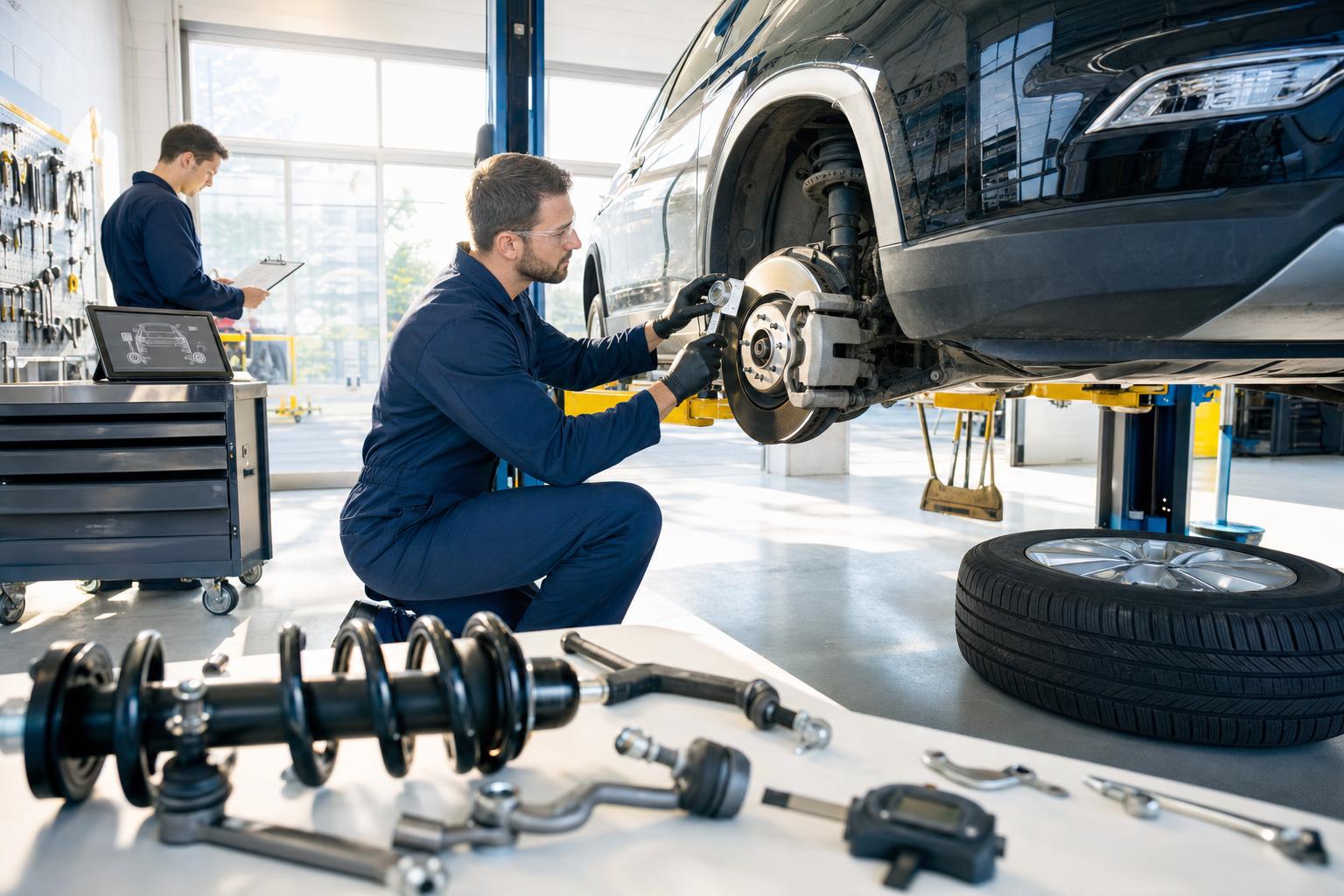
What a Safety Inspection Actually Covers
Brakes, steering, tires, lights, and structure all get checked closely. However, your air conditioning and your infotainment screen do not. In fact, the certificate never indicates the true condition of the vehicle.
TL;DR: The Quick Answer
- What’s checked: Brakes, steering, suspension, tires, lights, seatbelts, glass, and body structure, following the official MTO inspection standard.
- What’s excluded: Air conditioning, infotainment, ignition, engine components, and general emissions testing.
- What it means: A safety standards certificate confirms the vehicle passed is safe to drive on a roadway for 36 days.
- How long it takes: Most vehicle safety inspections take approximately 60 minutes. However, inspections may take longer if we discover brake-related issues, significant rust, or corrosion, particularly on older vehicles..
Table of Contents
- What Does the Ontario Safety Inspection Checklist Check For?
- How Ontario Safety Inspections Handle Brakes and Steering
- What Do Ontario Inspectors Check on a Car, Item by Item?
- What Will Fail a Safety Inspection in Ontario?
- What Is Not Covered in an Ontario Safety Inspection?
- Does a Safety Inspection Check Air Conditioning in Ontario?
- Is a Safety Standards Certificate a Warranty?
- Safety Inspection vs Emissions Test in Ontario
- How Long Does It Take and What Does It Cost?
- Quick Reference Table: Pass or Fail Factors
- A Simple Pre-Inspection Checklist You Can Use
- Key Takeaways
- Frequently Asked Questions
What Does the Ontario Safety Inspection Checklist Check For?
The Ontario safety inspection checklist checks the parts of your car that keep you safe on the road. Specifically, it looks at brakes, steering, suspension, tires, lights, seatbelts, glass, and the frame or body structure.
This checklist comes from the province’s official inspection standard, which mechanics across Ontario must follow. As a result, the process is consistent whether you visit a shop in Toronto, Ottawa, or a small town garage.
Consequently, the goal is not to judge how nice your car looks. Instead, it confirms the vehicle meets a minimum bar for safe operation on public roads. For a deeper look at how a full inspection service works, our Ontario Safety Inspections page walks through the process in more detail.
How Ontario Safety Inspections Handle Brakes and Steering
Brakes and steering get some of the closest attention during an Ontario safety check. Technicians measure brake pad thickness, check rotors, and test the parking brake for proper function.
In addition, they inspect brake lines for leaks, rust, or damage. On the steering side, inspectors check for excessive play in the wheel, worn tie rod ends, and any looseness in the steering components.
For example, a car with grinding noises during braking often fails this part of the test. If you have noticed odd sounds already, our guide on brake noise and what it means explains common causes. Furthermore, suspension components like shocks, struts, and ball joints get checked for wear performance, since worn suspension can affect steering control. Our steering and suspension services page covers the repair side of this system.
What Do Ontario Inspectors Check on a Car, Item by Item?
Ontario inspectors check a defined list of mechanical and structural items, following the government’s official standard. Each item gets a pass or fail rating based on measurable wear limits, not personal opinion.
The full list is detailed in the MTO Passenger/Light-Duty Vehicle Inspection Standard, a public PDF document. This standard gives shops exact measurements and conditions for every component.
Core Items on the Checklist
- Brake system, including pads, rotors, drums, and brake lines
- Steering components and linkage
- Suspension parts, such as springs, shocks, and struts
- Tires, including tread depth and sidewall condition
- Lighting, including headlights, brake lights, and turn signals
- Seatbelts and airbags where equipped
- Windshield, mirrors, and glass condition
- Frame, floor pan, and body structure for rust or damage
- Exhaust system for leaks and mounting
- Fuel system for visible leaks.
Therefore, if you want to reduce the chance of surprises, a pre-check at home helps. Our article on helpful tips to avoid car problems offers a good starting point.
What Will Fail a Safety Inspection in Ontario?
A vehicle will fail an Ontario safety inspection if any checked item falls below the minimum safety standard. Common failure points include worn brake pads, bald tires, cracked windshields, and non-working lights.
Rust is another frequent cause of failure, especially rust that has weakened the frame or floor pan. Similarly, a steering system with too much play, or a suspension part that is broken or loose, will not pass.
On the other hand, minor cosmetic issues, like small dents or faded paint, do not affect the result. As a result, owners should focus on function, not appearance, before booking an inspection.
What Is Not Covered in an Ontario Safety Inspection?
The Ontario safety inspection does not cover air conditioning, infotainment systems, or general engine performance. It also does not include a full emissions test.
In addition, items like the radio, backup camera calibration, or interior comfort features are outside the scope entirely. Consequently, a car can pass its safety check while still having a broken air conditioner or a glitchy touchscreen.
Does a Safety Inspection Check Air Conditioning in Ontario?
No, an Ontario safety inspection does not check air conditioning. The test focuses only on items tied to road safety, so comfort features like climate control fall outside its scope.
This surprises many buyers, especially those purchasing a used car with a valid certificate. However, a passed safety check tells you nothing about whether the AC blows cold air. If cooling performance matters to you, book a separate check through a service like air conditioning diagnostics before you buy or after a long winter of storage. Our air system service page has more details on how these checks work.
Is a Safety Standards Certificate a Warranty?
No. A Safety Standards Certificate is not a warranty or guarantee of a vehicle’s condition. It simply confirms that the vehicle met Ontario’s minimum safety standards at the time of inspection.
According to Ontario’s Ministry of Transportation (MTO), a Safety Standards Certificate is valid for 36 calendar days after the inspection. However, this validity period does not guarantee that the vehicle will remain mechanically sound or free from problems during those 36 days.
For example, a brake component that meets safety requirements during the inspection could wear out or develop problems afterward. The certificate reflects the vehicle’s condition when inspected, not its future reliability.
This distinction is particularly important when buying a used vehicle. While a Safety Standards Certificate confirms compliance with minimum safety requirements, it does not provide a comprehensive assessment of the vehicle’s overall mechanical health.
For greater peace of mind, used car buyers should consider a separate pre-purchase inspection to identify potential mechanical issues, maintenance concerns, and costly repairs before completing their purchase.
Safety Inspection vs Emissions Test in Ontario
A safety inspection and an emissions test check different things entirely. The safety inspection looks at mechanical safety items, while an emissions test measures how clean the vehicle’s exhaust output is.
Ontario’s Drive Clean emissions testing program has changed significantly in recent years, and many vehicle categories now face different requirements than in the past. However, the safety inspection remains focused purely on the mechanical checklist described earlier in this guide.
Consequently, a driver should not assume that passing one test covers the other. Both serve separate purposes and, in many cases, are required at different times for different reasons.
How Long Does It Take and What Does It Cost?
Most Ontario safety inspections take 60 minutes to complete. However, the time can stretch longer if the technician finds problems that need a second look.
Cost varies by shop and by region, though most independent garages in Ontario charge a set inspection fee before any repair costs. On top of that, if your vehicle needs repairs to pass, those costs come separately and depend on the parts involved.
According to recent industry data, Canadian auto repair and maintenance spending has continued to climb, which reflects both aging vehicle fleets and rising parts costs across the country, a trend documented in Ontario’s vehicle inspection standard updates. Therefore, budgeting a little extra for potential repairs is a smart move before booking your test.
Quick Reference Table: Pass or Fail Factors
| Component | Common Pass Condition | Common Fail Condition |
|---|---|---|
| Brakes | Adequate pad thickness, no fluid leaks | Worn pads, leaking lines, weak parking brake |
| Tires | Tread above minimum depth, no sidewall damage | Bald tread, cracks, exposed cords |
| Steering | Minimal play, tight linkage | Excessive play, worn components |
| Lights | All bulbs functioning | Burnt-out headlights or signals |
| Glass | Clear, undamaged windshield | A crack extends more than 50 mm (5 cm) into the area swept by the windshield wipers. |
| Frame/Body | Solid structure, no major rust | Rust-through on a vehicle’s subframe or floor pan |
| Air Conditioning | Not assessed | Not assessed |
A Simple Pre-Inspection Checklist You Can Use
Before booking your safety test, a quick self-check at home can save time and money. Use this simple checklist to catch obvious issues first.
Pre-Inspection Self-Check:
- Walk around the car and check all tires for tread depth and visible damage.
- Test every light: headlights, brake lights, turn signals, and hazards.
- Listen for grinding or squealing when you brake gently in a driveway.
- Check the windshield for cracks directly in your line of sight.
- Look under the car for obvious rust or fluid leaks.
- Confirm your seatbelts latch, retract properly and windows rollup and down.
If you spot a problem, it is often cheaper to fix it before the inspection rather than after a failed result. Our page on quick and professional auto repair services can help you get ahead of common fail points. Small business owners managing a fleet may also benefit from a broader 400-point inspection to catch issues the safety check does not cover.
Key Takeaways
- Ontario’s safety inspection covers brakes, steering, tires, lights, seatbelts, glass, and body structure, based on the official MTO inspection standard.
- Air conditioning, infotainment, and pressurized fuel systems fall outside the scope of the standard safety test.
- A safety standards certificate proves the car passed only on the day it was issued, not a promise for the future.
- Most inspections take 60 minutes, though repairs needed to pass will add time and cost.
- Emissions testing and safety inspections are separate processes with different goals.
- Get your vehicle inspected first before spending more money on prepping your car.
Frequently Asked Questions
What will fail a safety inspection in Ontario?
Worn brakes, bald tires, broken lights, major rust, and cracked windshields are some common reasons a vehicle fails. Anything below the minimum standard on a checked item will result in a fail.
What does the Ontario safety inspection checklist check for?
The checklist covers brakes, steering, suspension, tires, lights, seatbelts, glass, and body structure. It does not include comfort features like air conditioning or entertainment systems.
What do Ontario inspectors check on a car?
Inspectors check mechanical safety items using measurable standards set by the province. This includes brake pad thickness, tire tread depth, steering play, and structural rust.
How long does an Ontario safety inspection typically take?
Most inspections take 60 minutes. However, the process can take longer if the technician finds an issue with brakes, that needs a closer look.
Does a safety inspection check the air conditioning or infotainment system in Ontario?
No, air conditioning and infotainment systems are not part of the official safety inspection. The test focuses strictly on items related to road safety.
Is a safety standards certificate a guarantee the car will not break down later?
No, the certificate only confirms the vehicle passed on the date it was issued. It does not guarantee future performance or protect against later mechanical problems.
Understanding exactly what gets checked, and what does not, helps you plan ahead instead of guessing. If you are due for a safety check, or simply want peace of mind before a big trip, our team can walk you through every step. Book your inspection today and drive with confidence, not uncertainty.