
Does Regenerative Braking Mean No Brake Service Needed? The Truth
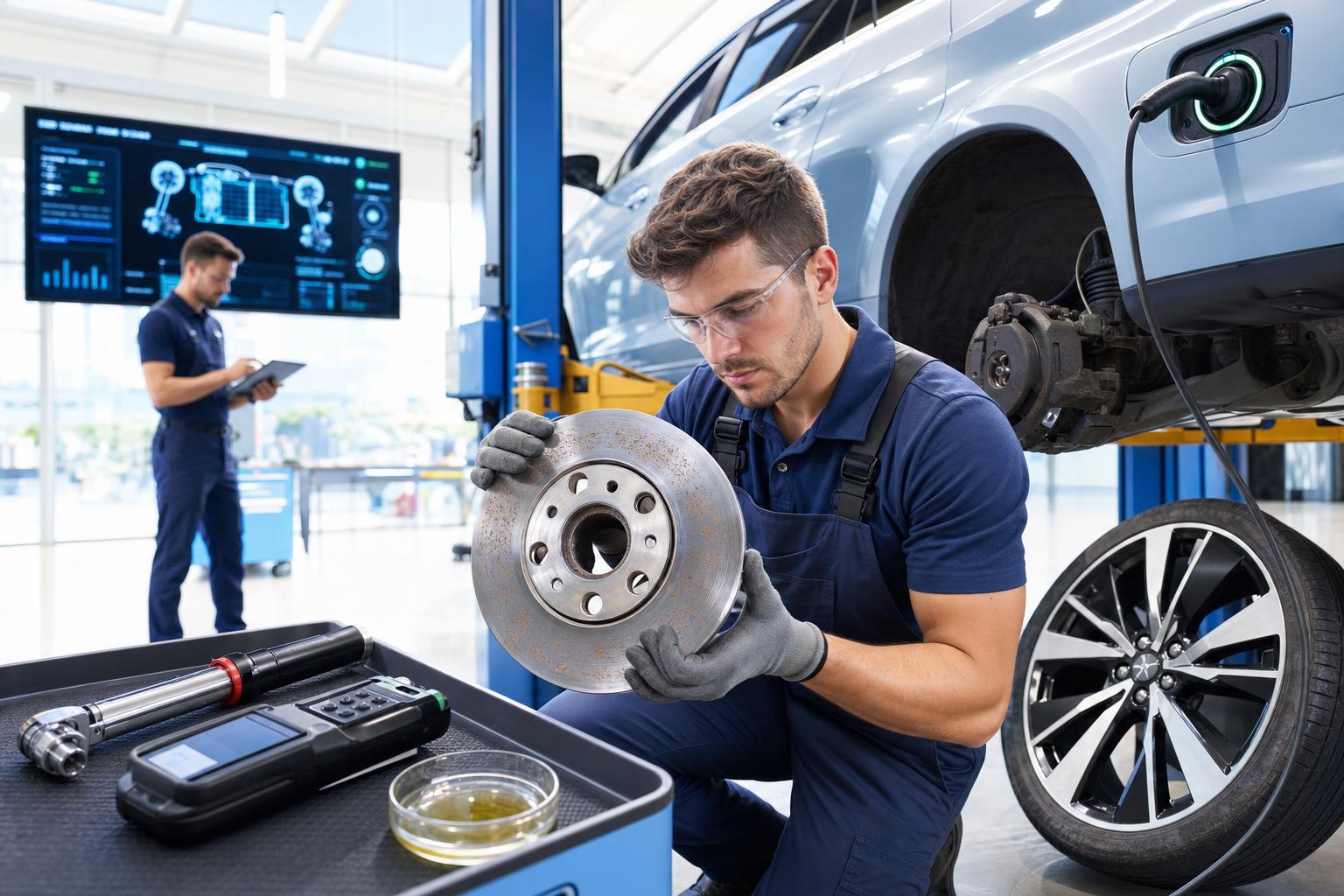
Many Canadian EV and hybrid drivers believe their brake pads will last forever. However, that belief can lead to costly surprises during winter months.
This guide explains why regenerative braking helps, yet does not replace regular brake service. As a result, you will know exactly what to watch for and when to book an inspection.
TL;DR: Quick Answer
- Does regenerative braking mean no brake service needed? No. Your car still has traditional friction brakes that need regular checks.
- Regenerative braking slows the car using the electric motor, which reduces wear on brake pads, but does not eliminate it.
- In Canada, cold weather, road salt, and light pedal use can cause rotor rust and sticking calipers, even on EVs.
- Most EV and hybrid brakes still need brake fluid changes, caliper lubrication after winter, and annual inspections, even if pads last longer.
Table of Contents
- What Is Regenerative Braking, and How Does It Work?
- Does Regenerative Braking Mean No Brake Service Needed?
- How Does Regenerative Braking Work in Cold Weather?
- Downsides of Regenerative Braking
- Why Do People Not Like Regenerative Braking?
- How Long Do Regenerative Brakes Last?
- One Pedal Driving and Brake Wear
- Should I Use Regenerative Braking All the Time?
- Signs Your EV Brakes Need Servicing
- Why Are My EV Brakes Sticking?
- Regenerative vs Friction Braking: A Quick Comparison
- Manager Checklist: EV Brake Maintenance Schedule
- EV Brake Inspection Cost in Canada
- Frequently Asked Questions
What Is Regenerative Braking, and How Does It Work?
Regenerative braking uses the electric motor to slow the vehicle, converting motion into electricity that recharges the battery. Consequently, this reduces reliance on the traditional friction brakes for everyday slowing.
Think of it like a bicycle dynamo. When you pedal, it powers a light. In an EV, the electric motor acts like an alternator: the moment you ease off the accelerator, it switches into generator mode, slowing the car and sending that energy back into the battery.
As a result, a computer decides how much of each stop the motor handles and how much goes to the friction brakes. Sensors read how hard you press the brake pedal, and most normal stops use the motor alone. However, the hydraulic pads and rotors still clamp down during hard stops, emergencies, when the battery is fully charged, and at low speeds of around 5 to 10 km/h. That is why the mechanical brake system, including pads, rotors, and calipers, remain fully installed and necessary.
Does Regenerative Braking Mean No Brake Service Needed?
No, regenerative braking does not mean your brakes never need servicing. Your vehicle still has physical brake pads, rotors, calipers, and fluid that require regular inspection, cleaning, and eventual replacement, just like any gas-powered car.
Regenerative braking simply shares the workload. Therefore, pads may last two to three times longer than on a traditional vehicle. In contrast, rotors will rust and pads can seize over time.
Furthermore, brake fluid absorbs moisture regardless of how often the friction brakes engage. Consequently, fluid still needs testing and replacement on a schedule, even on a Tesla or Chevrolet Bolt.
Owners who skip service entirely often face bigger repair bills later. For example, a shop visit for a simple inspection can catch a sticking caliper before it overheats the brake assembly.
How Does Regenerative Braking Work in Cold Weather?
Regenerative braking often weakens in cold weather because the battery cannot accept a charge as quickly when temperatures drop. As a result, your car automatically shifts more braking work to the traditional friction brakes during winter.
This is common across the Canadian climate, especially in provinces with long winters like Ontario, Quebec, and Alberta. Specifically, when the battery is cold, the onboard computer limits how much energy it can absorb.
Therefore, your friction brakes engage more often in January than in July. In addition, this seasonal shift means your pads and rotors may wear faster during winter months than owners expect.
This is also why rust can build up quickly on rotors that go unused during warmer months unless you turn off regen braking. Moisture, salt, and infrequent friction braking create a perfect environment for surface rust in Canadian winters.
Downsides of Regenerative Braking
Regenerative braking offers real benefits, yet it comes with a few trade-offs drivers should understand. Being aware of these downsides helps you plan smarter maintenance and avoid unwanted surprises.
- Rotor rust: Since friction brakes engage less often, rotors can develop rust, particularly during Canadian winters.
- Uneven wear patterns: Pads may glaze over or wear unevenly if they sit unused for long stretches.
- Reduced feel: Some drivers find the brake pedal feels different, less direct, compared to a traditional system.
- Sticking calipers: Calipers that rarely engage can seize slightly, especially in cold, salty conditions.
- Learning curve: New EV owners sometimes over rely on the accelerator for braking, which can feel unnatural at first.
Why Do People Not Like Regenerative Braking?
Some drivers dislike regenerative braking because the deceleration feels sudden or aggressive compared to coasting in a gas car. In addition, it can cause mild motion sickness for passengers who are not used to it.
Moreover, one pedal driving, where lifting off the accelerator slows the car dramatically, takes practice to master. For new drivers, this adjustment period can feel frustrating.
On the other hand, many drivers grow to prefer it once they adapt. Indeed, it reduces fatigue on long highway drives and improves overall efficiency.
How Long Do Regenerative Brakes Last?
Regenerative braking itself does not wear out like a mechanical part, since it relies on the electric motor and software. However, the friction brake components it protects, pads and rotors, can last anywhere from 50,000 to over 160,000 kilometres with proper care.
This is a significant improvement over traditional brakes, which often need pad replacement every 30,000 to 60,000 kilometres. Nevertheless, actual lifespan depends heavily on driving habits, climate, and how often the friction brakes are used.
For example, city drivers who brake often in stop and go traffic may see more wear than highway commuters. Similarly, drivers in coastal or salt heavy regions may see rotor corrosion long before pads wear out.
One Pedal Driving and Brake Wear
One pedal driving lets you accelerate and slow down using a single pedal, since lifting off triggers strong regenerative braking. As a result, this driving style further reduces wear on your physical brake pads.
However, it does not eliminate the need for friction brakes entirely. Emergency stops, steep declines, and low speed manoeuvres still require the mechanical system to engage.
Consequently, pads used with one pedal driving may develop light surface rust from underuse, particularly in winter. Therefore, some EV owners are advised to occasionally use firm pedal braking to keep components clean and functioning properly.
Practical Example: The “Brake Refresh” Habit
When we spoke with EV owners bringing vehicles in for winter checkups, we noticed a pattern: those who occasionally used firm pedal braking on empty roads had cleaner, rust-free rotors compared to owners who relied entirely on one pedal driving. Try this simple habit once a week: find a quiet stretch of road and apply firm, steady brake pressure for a few seconds. This helps scrape off surface rust and keeps the caliper components moving freely.
Should I Use Regenerative Braking All the Time?
Yes, using regenerative braking most of the time is safe and recommended, since it extends brake life and improves efficiency. However, you should occasionally use firm pedal braking to prevent rust buildup and keep components functioning smoothly.
Think of it as a balanced approach rather than an all or nothing choice. Specifically, rely on regenerative braking for daily driving, yet use full pedal pressure during highway exits or emergency stops.
This balanced habit protects your investment and keeps your EV or hybrid safer overall. For business owners managing fleet vehicles, training drivers on this habit can extend brake component life across an entire fleet.
Signs Your EV Brakes Need Servicing
Certain warning signs indicate your EV or hybrid brakes need attention, regardless of how advanced the regenerative system is. Catching these early prevents costly repairs and keeps you safe on the road.
- Squealing or grinding noise: This often signals worn pads or rust buildup on rotors.
- Vibration when braking: This may point to warped rotors or uneven pad wear.
- Longer stopping distances: This can indicate reduced brake performance or fluid issues.
- Dashboard warning lights: Modern EVs often display alerts for brake fluid or system faults.
- Pedal feels spongy or soft: This often points to air in the brake lines or old fluid.
- Visible rust on rotors: Especially common in Canada after winter road salt exposure.
If you notice any of these signs, book an inspection quickly. For more detail on noises specifically, see our guide on brake noises and what they mean.
Why Are My EV Brakes Sticking?
EV brakes often stick because calipers see less use than on traditional vehicles, allowing rust and grime to build up around moving parts. Consequently, the caliper slides or pistons can seize slightly, causing a dragging or sticking sensation.
This problem is especially common in Canadian winters, since road salt accelerates corrosion. In addition, vehicles parked outdoors for long stretches without driving are more prone to this issue.
Fortunately, this is a preventable problem with regular maintenance. A trained technician can clean, lubricate, and inspect caliper components before sticking becomes a bigger issue.
Regenerative vs Friction Braking: A Quick Comparison
The table below highlights the key differences between regenerative and traditional friction braking systems, helping you understand how they work together.
| Feature | Regenerative Braking | Friction Braking |
|---|---|---|
| Energy use | Recharges the battery | Converts energy to heat, no recharge |
| Wear on components | Very low wear, no pads involved | Pads and rotors wear over time |
| Performance in cold weather | Reduced effectiveness | Fully effective, unaffected by battery temperature |
| Maintenance needed | Software updates, minimal hardware service | Pad replacement, rotor resurfacing, fluid changes |
| Best used for | Daily, gradual slowing | Emergency stops, steep declines, low speeds |
Manager Checklist: EV Brake Maintenance Schedule
Fleet managers and small business owners running EV or hybrid vehicles need a clear maintenance routine. Use the checklist below to build a simple, repeatable schedule.
EV Brake Maintenance Checklist
- Inspect brake pads and rotors every 20,000 kilometres or once a year, even if wear seems minimal.
- Test brake fluid condition annually, since moisture absorption happens regardless of usage. Flush after 3 years.
- Check for caliper sticking or dragging every six months, particularly after winter.
- Encourage drivers to use firm pedal braking weekly to prevent rotor rust.
- Schedule a full 400 point inspection annually to catch issues early across the whole vehicle.
- Document brake service history for warranty and resale purposes.
This routine works well whether you manage one EV or a full fleet of vehicles. As a result, you avoid downtime and reduce long-term repair costs.
EV Brake Inspection Cost in Canada
A standard EV brake inspection in Canada typically costs less than a full brake job, since technicians are mainly checking wear, fluid, and caliper function. Costs vary by shop and region, so it is best to request a quote directly.
However, costs rise if rust removal, caliper replacement, or rotor replacement is required. Therefore, catching problems early through regular inspection is the most cost effective approach.
Business owners should factor brake inspections into their overall vehicle upkeep budget. In fact, comparing the cost of prevention versus repair is a smart exercise, similar to the guidance in this article on maintenance versus repair costs.
Tesla Brake Maintenance Schedule in Canada
Tesla recommends inspecting brake fluid every two years and checking brake pads and rotors during routine service visits. However, Canadian winters may require more frequent checks due to road salt and cold weather rust.
Specifically, Tesla owners in provinces with heavy winter salting should consider a mid-winter brake inspection. This extra step catches rust or sticking calipers before spring driving begins.
In addition, Tesla’s onboard diagnostics may not always flag early rust or minor caliper issues. Therefore, a hands-on inspection by a qualified technician remains valuable, even for the most advanced EVs.
Do Hybrid Cars Need Brake Pad Replacement?
Yes, hybrid cars need brake pad replacement, though typically less often than traditional gas vehicles. Since hybrids use regenerative braking alongside a gas engine, pads generally last longer, but they still wear down or get damaged by rusty rotors over time.
For example, a hybrid driven mostly on the highway may need pad replacement less frequently. In contrast, city driving with frequent hard stops accelerates wear, even on a hybrid.
Regular inspection remains the best way to know exactly when replacement is due. Guessing based on mileage alone can lead to either premature replacement or, worse, overdue safety risks.
Frequently Asked Questions
Does regenerative braking mean no brake service needed?
No, regenerative braking does not eliminate the need for brake service. Your vehicle still has pads, rotors, calipers, and fluid that need regular checks and eventual replacement.
What are the downsides of regenerative braking?
Downsides include potential rotor rust from underuse, a different pedal feel, and occasional caliper sticking, particularly in cold, salty Canadian winters.
How long do regenerative brakes last?
Friction brake components protected by regenerative braking often last 50,000 to over 160,000 kilometres, depending on driving habits and climate conditions.
Should I use regenerative braking all the time?
Yes, using it most of the time is recommended, though occasional firm pedal braking helps prevent rust and keeps components functioning properly.
Why are my EV brakes sticking in winter?
EV brakes often stick in winter due to rust and grime buildup around calipers, since they engage less often than traditional friction brakes.
Key Takeaways
- Regenerative braking reduces wear, yet it does not replace the need for regular brake service.
- Canadian winters increase the risk of rotor rust and caliper sticking, even on efficient EVs.
- Brake fluid still needs regular testing and replacement, regardless of how the vehicle brakes.
- Using firm pedal braking occasionally helps prevent rust buildup from one pedal driving.
- Fleet managers and business owners benefit from a documented maintenance schedule for EV brakes.
- A professional inspection remains the best way to catch early signs of wear or sticking components.
Regenerative braking is a genuine advancement, and it truly does extend the life of your brake pads. However, it does not remove the need for care, inspection, and the annual inspection.
If it has been a while since your last brake check, now is a good time to book one. Contact a trusted local shop, such as the team behind our brake services, to keep your EV or hybrid safe through every Canadian season.