
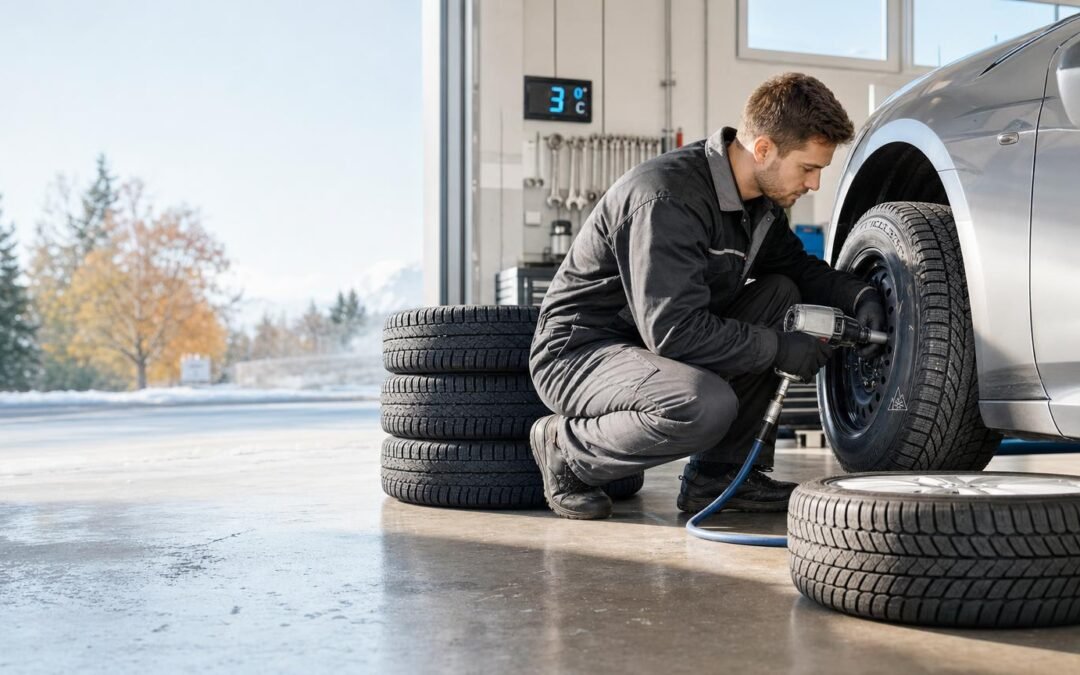
What Temperature To Switch To Winter Tires in Canada
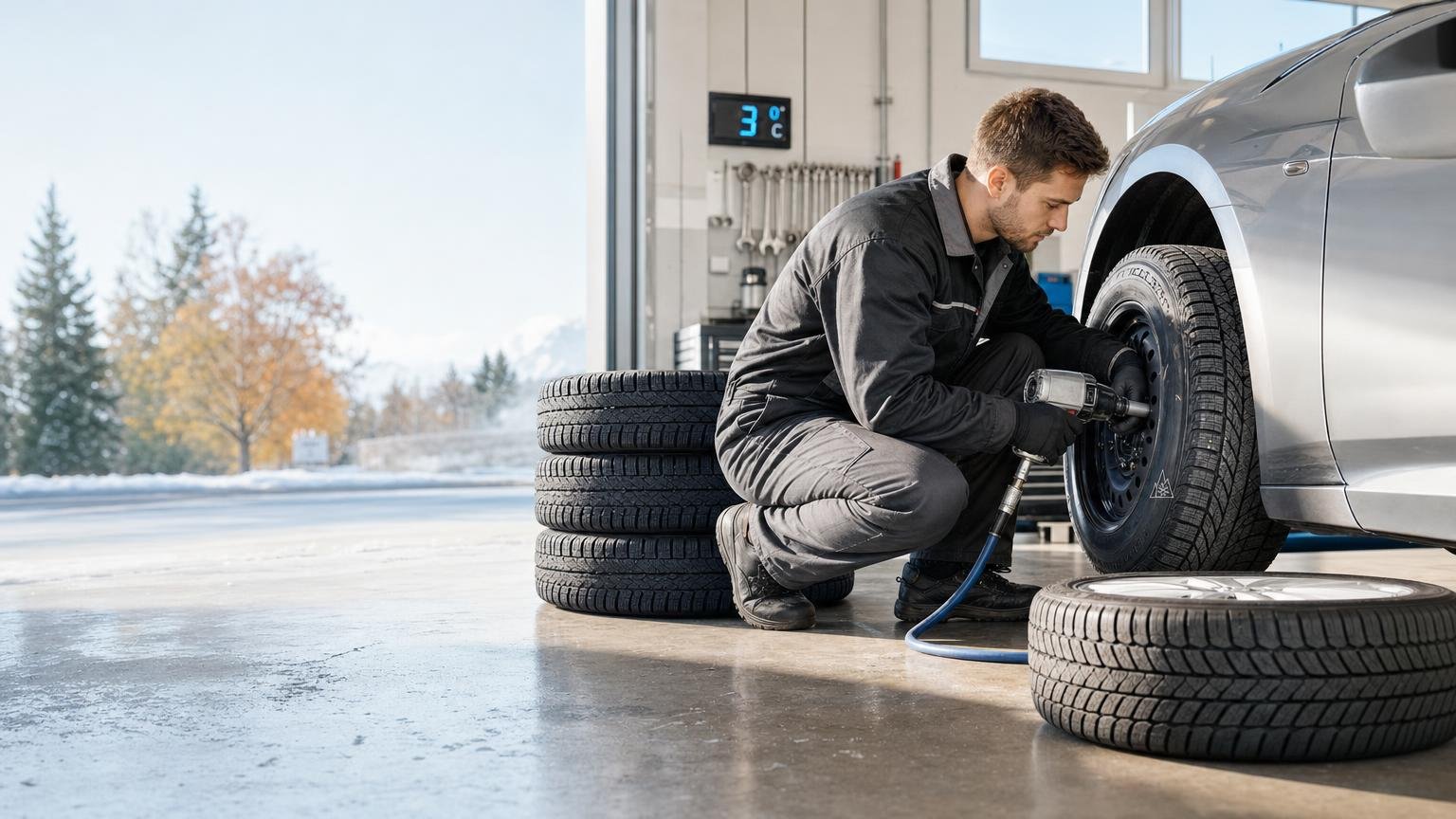
Plan to switch to winter tires as temperatures settle around 7°C and below, before you need to drive in snow or icy conditions. Use the forecast for the places and times you drive, and check any provincial or route-specific requirements.
The 7°C guideline is a useful reminder to prepare. It is not a precise boundary at which every tire suddenly changes performance. Tire design, tread depth, condition and the road surface all matter.
What the 7°C Rule Means
Transport Canada winter tire guidance explains that summer and conventional all-season tires lose elasticity as temperatures fall, while winter tires are designed to retain flexibility in colder conditions. That is why you should plan the change before a storm arrives.
Temperature is only part of the decision. Snow, ice and water also affect grip. A cold dry road and an icy intersection are different driving situations, even when the air temperature is the same.
Review daytime and overnight forecasts, particularly if you leave early or drive home late. An afternoon high above 7°C does not describe the conditions on your morning commute.
Is October Too Early?
October can be a sensible time to change tires, but the month alone does not decide it. Check local conditions, upcoming travel and appointment availability. A northern trip or mountain route may change your timing even if the weather near home is mild.
Avoid waiting for the first snowfall to start planning. Ask the shop about availability while you still have time to choose an appointment.
There is a trade-off if warm weather continues. Continental on winter tires in warm weather explains that winter tires can wear faster and provide less responsive handling on warm pavement. A short mild spell is different from months of warm-weather driving, but there is no universal allowance for how many warm days or kilometres are harmless.
A Practical Way to Choose Your Installation Date
- Check the forecast for your regular driving times and destinations, not just the daily high at home.
- Check the legal dates and equipment requirements along your planned route.
- Inspect the tires you intend to install and arrange replacement if their condition is unsuitable.
- Book before expected winter conditions or an applicable deadline, then keep watching for forecast changes.
For example, if your afternoon forecast remains mild but your early commute is approaching freezing and snow is forecast, plan around that commute. This is a hypothetical planning example, not a forecast for a particular Canadian city.
Provincial Rules Can Affect Timing
Unlike some Canadian provinces, Ontario does not require drivers of ordinary passenger vehicles to install winter tires by a specific date. However, the Ontario Ministry of Transportation strongly recommends using four matching winter tires to improve traction, braking and control during snowy, icy and freezing conditions.
For drivers in Ottawa and across Ontario, the best time to switch is when temperatures consistently approach or fall below 7°C, preferably before the first significant snowfall.
Ontario Winter Tire Insurance Discount Requirements
Although winter tires are not legally mandatory for most passenger vehicles, Ontario requires automobile insurers to offer a winter-tire discount for eligible private passenger auto insurance policies.
However, insurance providers may establish specific installation and removal dates as conditions for receiving the discount. These dates vary by insurer and should not be confused with provincial road laws.
To avoid losing eligibility for your winter-tire discount:
- Confirm your insurer’s required installation and removal dates.
- Ensure all four tires meet your insurer’s winter-tire requirements.
- Check whether your insurer requires confirmation or documentation of winter-tire use.
- Schedule your tire changeover early enough to meet both safety recommendations and insurance requirements.
Travelling Outside Ontario?
If you plan to drive outside Ontario during winter, check the regulations applicable to your destination and route. Other provinces may have mandatory winter-tire periods or equipment requirements on designated highways.
Ultimately, Ontario drivers should schedule winter tire installation based on weather conditions and applicable insurance requirements, rather than waiting for a legally mandated date that does not exist for ordinary passenger vehicles.
All-Season, All-Weather and Winter Tires
The names can be confusing. Conventional all-season tires offer a compromise for varied conditions and some light snow. All-weather tires are intended for year-round use and carry the three-peak mountain snowflake symbol. Dedicated winter tires focus on winter conditions.
| Tire Category | Intended Use | Main Limitation |
|---|---|---|
| Summer | Warm dry and wet roads | Not intended for snow or ice; follow cold-use instructions. |
| Conventional All-Season | Moderate conditions and some light snow | Limited capability in sustained severe winter conditions. |
| All-Weather with 3PMSF | Year-round use, including qualifying snow performance | Winter and warm-weather performance vary by model. |
| Dedicated Winter | Seasonal cold-weather, snow and ice use | Warm-weather wear and handling trade-offs. |
This comparison draws on Michelin seasonal tire comparison, Michelin CrossClimate2 product information and Continental on winter tires in warm weather. It is not a set of certified temperature ranges.
Check the sidewall and specifications, not just the sales label. For example, Michelin labels CrossClimate2 “All-Season” while also displaying the 3PMSF marking and describing year-round use. Michelin CrossClimate2 product information.
The mountain snowflake indicates specified snow-traction performance; it does not mean that all qualifying tires have identical ice grip. For frequent icy roads, heavy snow or demanding winter travel, discuss dedicated winter options with a tire professional. Compare the actual models suitable for your vehicle.
Can You Use Summer Tires in Cold Weather?
Summer tires are not suitable for snow or ice. Their compounds are designed for warmer conditions, and cold can reduce flexibility and traction. Continental on summer tires in winter recommends against their use in snow, ice or frequently freezing conditions.
Follow the tire manufacturer’s specific limits for driving, storage and handling. Some performance tires have special cold-weather precautions, including conditioning before mounting or dismounting. Toyo cold-weather handling advisory gives product-specific instructions; those temperatures must not be applied to every summer tire.
Plan the change before winter conditions arrive rather than trying to find the lowest temperature at which you can keep using a summer tire.
Can Winter Tires Be Installed at Any Temperature?
Yes. In Ontario, you can install regular, non-studded winter tires before temperatures drop to 7°C. There is no legally mandated outdoor temperature for installing them.
However, 7°C is an important guideline for deciding when to switch. According to Transport Canada, all-season and summer tires begin losing flexibility and traction as temperatures fall below 7°C. Winter tires are designed to maintain better grip in colder conditions.
For drivers in Ottawa and across Ontario, the best approach is to schedule a winter tire changeover when temperatures consistently approach 7°C, preferably before the first snowfall or icy road conditions. Installing winter tires slightly earlier is generally fine, although prolonged driving in warmer temperatures can increase tire wear.
What About Studded Winter Tires in Ontario?
Ontario has separate restrictions for studded tires. Under Ontario Regulation 625 of the Highway Traffic Act:
- Studded tires are generally permitted from September 1 to May 31 on eligible vehicles.
- Their use is primarily restricted to eligible Northern Ontario residents and certain other authorized vehicle permit holders.
- Visitors from outside Ontario may qualify for a limited exemption when their vehicles are in the province for no longer than 30 days.
- Most drivers residing in Ottawa and Southern Ontario cannot legally use studded tires on public roads.
For most Ontario motorists, standard non-studded winter tires are the appropriate choice for winter driving.
Does Seasonal Switching Wear Tires Out Faster?
A properly performed seasonal change is routine maintenance. Using two sets divides your driving distance between them and lets each operate in its intended season. It does not prevent rubber from aging or guarantee that you will obtain more total kilometres before replacement. Michelin tire replacement guidance.
Distinguish a wheel swap from remounting tires. Tires already fitted to a second set of wheels can be changed as complete assemblies. Using one set of wheels requires the tires to be removed and remounted. Ask what work, balancing and sensor requirements apply to your vehicle.
Correct installation matters. Wheel fasteners must be tightened to the vehicle manufacturer’s specification. Incorrect torque can damage hardware or leave a wheel insecure. Follow the installer’s and manufacturer’s instructions for a torque recheck. Continental wheel torque guidance.
How Many Seasons Should Winter Tires Last?
Most winter tires last approximately four to six winter seasons when used seasonally and properly maintained, according to Michelin Canada. However, this is a general estimate rather than a guaranteed lifespan.
How long your winter tires last depends on several factors, including annual mileage, driving habits, road conditions, tire pressure, wheel alignment and storage. Drivers who travel long distances or frequently encounter rough winter roads may need replacements sooner.
When Should Winter Tires Be Replaced in Ontario?
Tread depth is one of the most important indicators of winter tire safety.
According to Transport Canada, tires worn close to 4 mm (5/32 inch) of tread depth should not be used on snow-covered roads because reduced tread depth affects traction.
While Ontario Regulation 625 generally establishes a legal minimum of 1.5 mm in specified tread grooves, this is not a recommended safety threshold for winter driving.
For motorists in Ottawa and across Ontario, checking tread depth before each winter season helps determine whether the tires have enough remaining tread for safe driving throughout the colder months.
Tire age also matters. Michelin recommends professional inspections at least annually after five years of use and replacement after ten years from the manufacturing date, even when tread remains. Tires showing cracks, bulges, uneven wear or other signs of deterioration should be assessed sooner.
How Can You Extend the Lifespan of Winter Tires?
Proper maintenance and storage can help preserve tire performance:
- Check tire pressure regularly, especially during significant temperature changes.
- Rotate tires according to the vehicle manufacturer’s recommendations, considering any directional or size restrictions.
- Inspect tread depth and look for uneven wear or visible damage.
- Clean and dry tires before storing them.
- Store unused tires indoors in a cool, dry, dark location away from sunlight, heat and ozone-producing equipment.
- Store tires mounted on rims horizontally or hanging; store unmounted tires upright.
Ultimately, replace winter tires based on their tread depth, age and condition, not simply the number of seasons they have been used.
Checklist Before and After the Swap
- Arrange four compatible winter tires, following the vehicle’s approved fitment. Ontario recommends a full set of four for winter driving. Ontario winter driving guidance.
- Have tread, age, damage and uneven wear checked before installation.
- Confirm the work and price, including any balancing, sensors or storage.
- Ask whether other scheduled checks, such as a brake inspection, are appropriate; confirm any added charge.
- Follow the instructions for wheel-fastener torque and any recheck.
- Check cold pressure monthly and before long trips, using the vehicle label or manual. Do not use the sidewall maximum as the target. Michelin tire pressure guidance.
- Plan the spring change around sustained warmer conditions, remaining winter hazards and applicable legal periods.
Frequently Asked Questions
What Temperature Should I Switch to Winter Tires?
Use sustained temperatures around 7°C and below as your planning guide. Install before expected winter conditions or an applicable deadline, and consider temperatures when you actually drive.
Should I Switch Seasonally or Use All-Season Tires Year-Round?
Choose for your vehicle and conditions. Conventional all-season tires have winter limitations. A suitable 3PMSF all-weather tire may be a year-round option; dedicated winter tires deserve consideration for demanding winter use.
Do Winter Tires Need a Specific Installation Temperature?
No universal 7°C installation temperature applies. Follow the manufacturer’s handling instructions and any legal restrictions on studded-tire use.
Are All-Weather Tires a Substitute for Winter Tires?
They can be an option for some drivers, but the marking does not make every model equally capable on ice or snow. Consider your route, expected conditions and the specific tire’s capabilities.
Will Switching Twice a Year Cost More in the Long Run?
It adds seasonal service costs and may require wheels, sensors or storage. Compare the complete cost over your expected ownership period. Splitting mileage between sets does not, by itself, prove a saving.
Plan Your Winter Tire Change in Ottawa
Jim Dickinson Auto Tech offers winter and summer tire installation. Contact the shop to discuss suitable tires, an appointment and a quote for your vehicle. Visit Jim Dickinson Auto Tech tire services for details.
This guide provides general information. Tire choice and installation should follow the vehicle and tire manufacturers’ instructions and the requirements where you drive.